
The Rocky Mountaineer- Day One: Coastal to Canyons
Day one of our two-day journey to Banff took us eastbound from Vancouver to Kamloops, travelling from lush coastal rainforest into the arid interior plateau. After boarding the Rocky Mountaineer and settling in for what would be around 12 hours onboard, we were served a beautifully presented and delicious breakfast, accompanied by coffee or tea. Mealtimes offered a choice from a curated menu, with plenty of hot and cold drinks — including alcohol, if you fancied it. Every meal was generous and of exceptional quality.
As we made our way across the Coast Mountains, we followed the Fraser River — British Columbia’s longest, winding through the scenic Fraser Valley. Since this route uses the Canadian Pacific Railway, the Rocky Mountaineer occasionally has to yield to colossal freight trains by pulling into sidings. And when I say colossal, I mean it: some are over two miles long! For an Englishman, that’s almost inconceivable. At several points, we had to pause and let them pass, which caused a few delays — but honestly, aboard the Rocky Mountaineer, nobody seemed to mind. Watching the seemingly endless freight cars roll by was almost hypnotic. During these stops, we’d often play a quick game of cards or gaze out the opposite windows, soaking in the scenery.
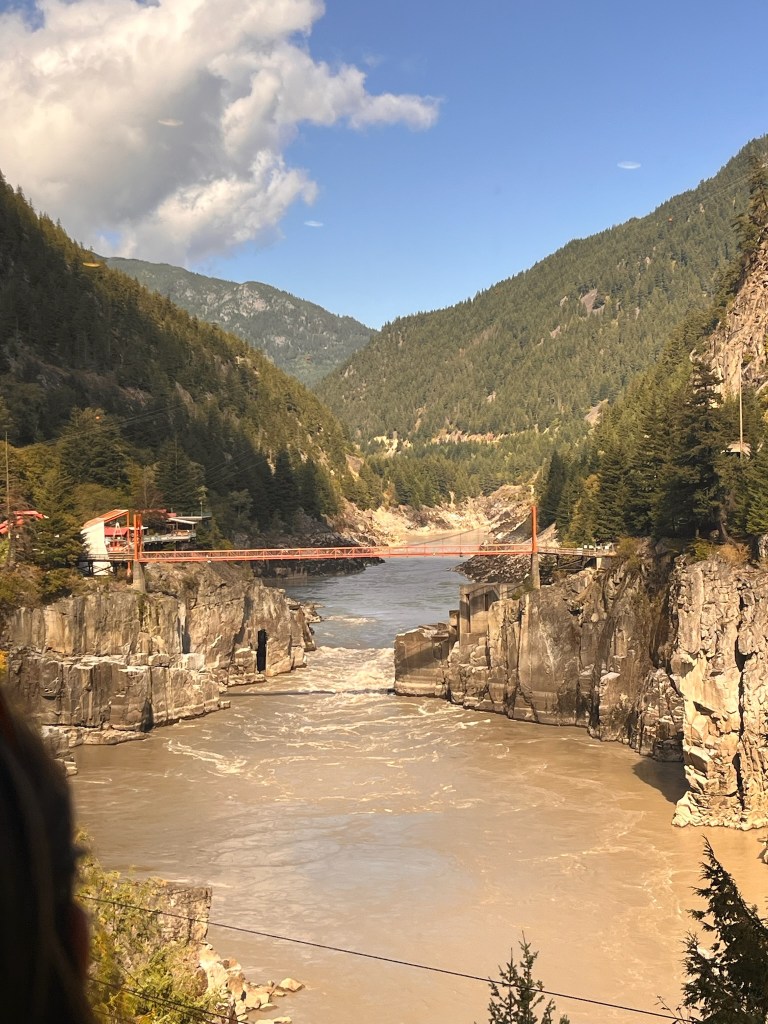
As we approached the Fraser Canyon, we reached the dramatic narrowing known as Hell’s Gate. Here, the river funnels through a tight gorge with immense force. There’s a footbridge that spans the canyon and offers an impressive view, and an Airtram that allows visitors to glide across in a cable car, offering a bird’s-eye perspective of the thundering waters below.
We continued our journey, mesmerised by the ever-changing landscapes and on the lookout for wildlife. The crew encouraged us to shout out any sightings — for example, “Bald eagle on the left at 11 o’clock!” — so everyone could quickly turn and try to catch a glimpse. This sparked great camaraderie among the passengers, and we soon made friends in our carriage. Of course, there were some memorable characters onboard, which added to the fun. One highlight I’ll never forget was seeing thousands of salmon migrating upstream — an incredible sight to witness from a moving train.
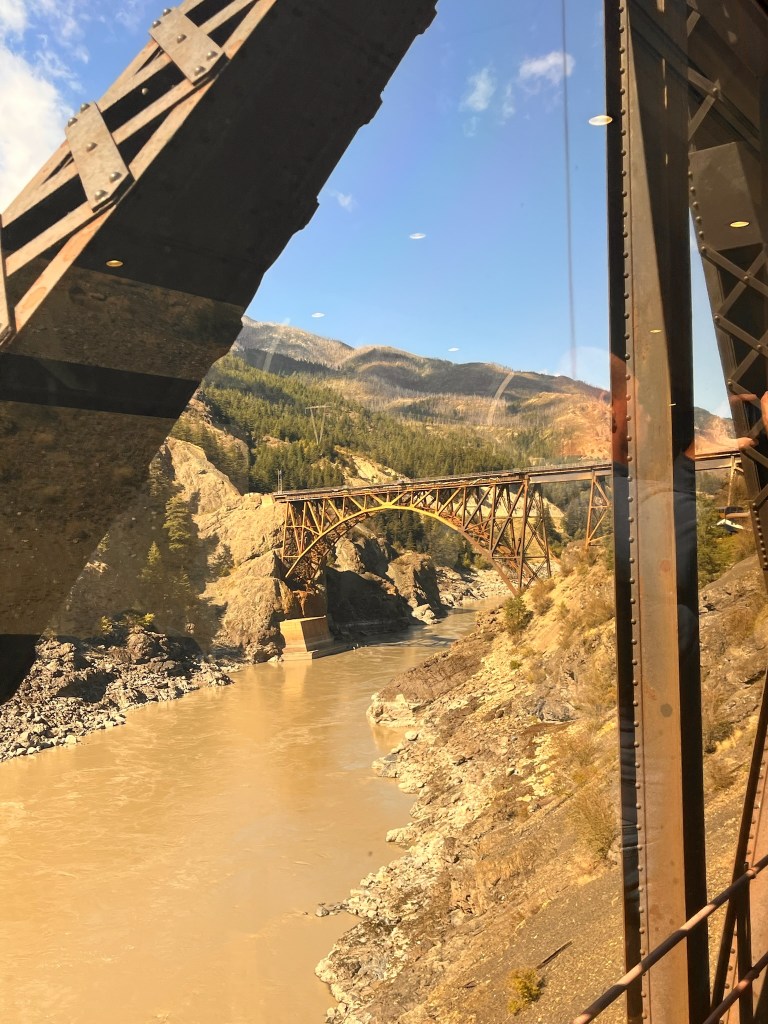
Next came the Cisco Crossing, an iconic railway intersection at Siska, BC, where two major rail lines crisscross the Fraser River. We were travelling on the Canadian Pacific line, which was built first. As we crossed our bridge, we could see the Canadian National bridge just above us on the left- longer and loftier, which we passed under shortly afterwards.
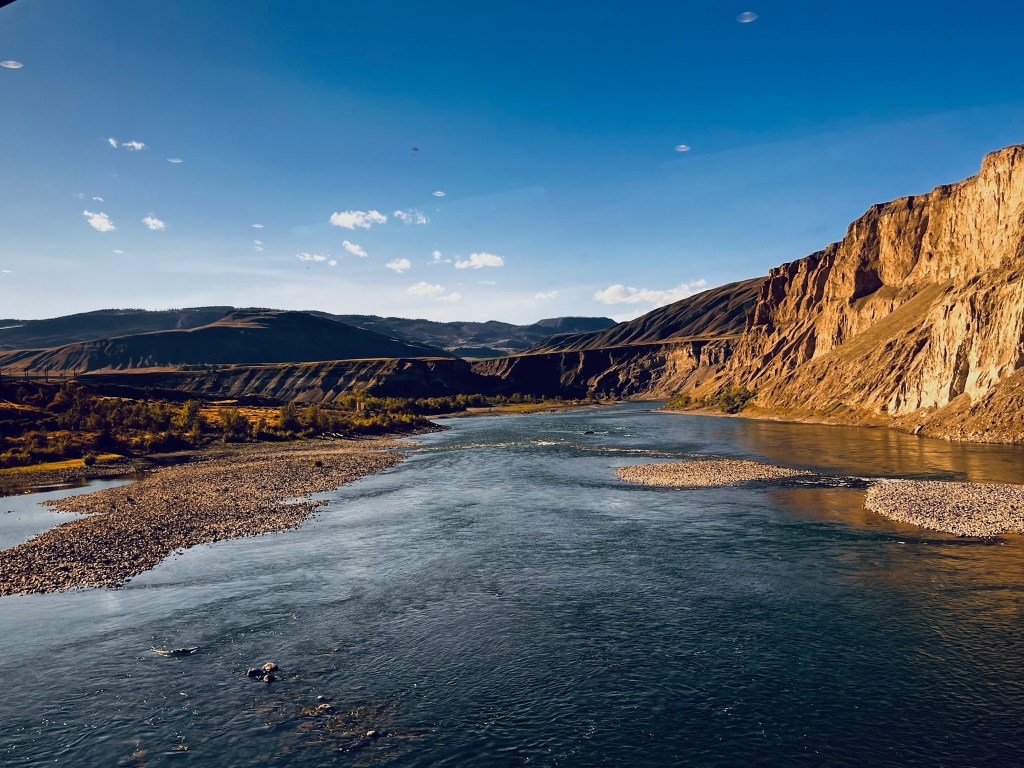
Further along the Fraser at Lytton, we reached its confluence with the Thompson River. This was a particularly striking scene: the sediment-heavy, brown Fraser flowing side-by-side with the clear, green-blue waters of the Thompson, the contrast in colour marking the meeting of these two great rivers. From there, we followed the Thompson eastward toward Kamloops.
We passed through Rainbow Canyon, where vibrant bands of coloured rock lit up the cliffs, and then into Black Canyon, named for its darker, dramatic stone formations. At one point, we even spotted a hillside covered with painted college graduation years — in the middle of nowhere!

As evening fell, we skirted the shores of Kamloops Lake, eventually pulling into Kamloops station after almost 12 unforgettable hours. True to the Rocky Mountaineer’s finely tuned logistics, coaches were ready and waiting to whisk us off to our hotel. In just 5–10 minutes after disembarking we were in our room, ready for a quick shower and a night’s sleep before our early start for Day Two — the ascent into the heart of the Rocky Mountains, and onward to our final destination: Banff.
 Western Canada Grand Tour
Leave a comment